6 Surprising Truths Behind India's Ethanol Fuel Revolution - Part 1
Introduction: A Climate Success Story... With a Twist
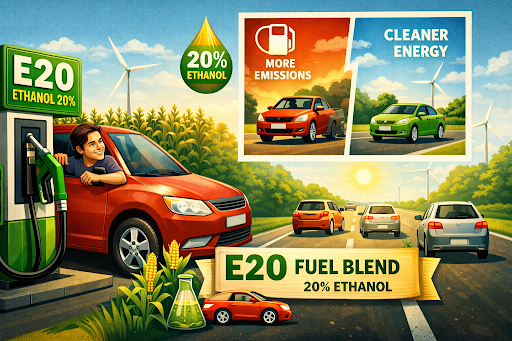
By any measure, India's ethanol blending program is a landmark climate success. The nation achieved its ambitious goal of 20% ethanol blending in petrol (E20) a full five years ahead of schedule, a feat celebrated as a major step towards energy independence. The headline numbers are undeniably impressive: an estimated Rs 1.44 lakh crore saved in foreign exchange since 2014 and a staggering 736 lakh tones of CO2 emissions avoided. But beneath this story of green triumph lies a more complex and surprising reality. This is the untold story of India's ethanol revolution—a journey where energy independence clashes with food security, climate gains demand a heavy environmental price, and a government- backed boom teeters on the edge of a bust.
1. The Fuel is Cheaper, But Your Drive Isn't
On the surface, the economics for consumers seem straightforward. With ethanol priced around Rs 70 per liter compared to petrol at nearly Rs 100 and above, drivers might expect significant savings at the pump. The catch, however, lies in basic physics. Ethanol contains about 34% less energy per liter than petrol. For drivers using E20 fuel, this energy difference translates directly into a 2-7% drop in mileage, a reality that "negates much of the purported price advantage." For owners of older vehicles i.e., vehicles prior to April 2023, not optimized for higher ethanol blends, the costs can be even clearer, with routine part replacements required for "seals, fuel lines, and rubber components" that degrade faster. The direct financial benefits to the average driver, it turns out, are far less clear-cut than they appear.
2. The Program Has Swapped Sugarcane for Food Grains
India's ethanol program was built on the back of its massive sugar industry, initially using sugarcane byproducts like molasses as its primary feedstock. But a fundamental and surprising shift has occurred. In the 2023-24 supply year, grain-based ethanol (59.8%) surpassed sugarcane-based sources (40.2%) for the very first time, with maize becoming the new mainstay of the program. The consequences of this pivot are significant. Nearly 5.2 million tonnes of rice and about a third of India's total maize output were redirected to produce fuel. This created immediate pressure on food supply chains, causing maize prices to soar by 22% in FY23-24. In a move that highlights the program's paradoxical outcomes, "after nearly twenty years, India became a net maize importer—an ironic twist for an initiative meant to curb foreign dependencies." What began as a plan for energy independence has now ignited a pressing "food vs. fuel" dilemma, impacting food prices and creating new import needs.
3. The "Green" Fuel Comes with a Huge Environmental Cost
The program's most celebrated achievement is its environmental contribution, having reduced carbon emissions by nearly 736 lakh tonnes—an impact equivalent to planting 30 crore trees. However, this climate gain comes with a significant ecological caveat: water consumption. Sugarcane, still a backbone of the program, is one of the most water-intensive crops in a nation already facing severe water scarcity, requiring a staggering 60-70 tonnes of water for every tonne of cane harvested. The new reliance on large-scale grain cultivation for ethanol only adds to these concerns, raising questions about sustainable water use, land allocation, and the intensity of fertilizer application. This creates a challenging paradox where a key climate action initiative is placing immense strain on another of the nation's most critical and vulnerable natural resources.
But the story doesn't end with environmental trade-offs. What happens when a government-backed industry becomes too successful? And what about the producers who invested heavily based on government promises—are they now facing an uncertain future? In Part 2, we uncover how India's ethanol boom is becoming a victim of its own success, and whether a perfect solution actually exists to fix these mounting challenges.
[Continue to Part 2 →]
- Analysis of geopolitical and finance topics