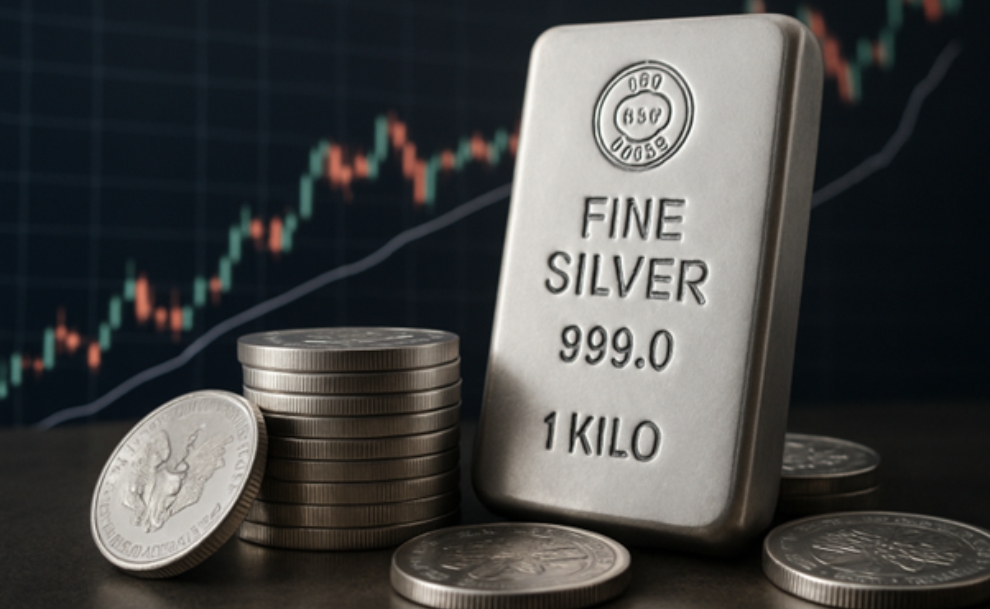
This second part analyses the ongoing surge in silver prices in India in 2025, focusing on global supply, investment demand, and key economic influences.
Why Silver Prices Are Rising in India in 2025? - Part 2
Quick Recap of Part 1
In the first part of this series, we explored the dramatic rise of silver prices in 2025—from $28.92 per ounce in January to over $50 in October, representing a stunning more than 60% gain. We discovered that this surge isn't just a temporary rally but stems from deep structural issues: a seven-year consecutive supply deficit, declining mine production despite rising prices, and explosive growth in industrial demand. We learned how silver's unique production characteristics (70% comes as a byproduct of other metals) means supply can't quickly respond to price increases. Most importantly, we examined how the renewable energy revolution—particularly solar panels, electric vehicles, and 5G technology—has transformed silver from primarily a precious metal into a critical industrial commodity. India's ambitious 500 GW solar target by 2030 alone could require 70,000 metric tons of silver. Now, let's explore how investment flows, technical factors, and India-specific dynamics pushed prices even higher—and what it all means for you.
Investment Demand: ETFs and the Safe-Haven Bid
Geopolitical friction and episodic market shocks throughout 2025—renewed conflicts, political risk in several regions, heightened US-China tensions—have revived safe-haven buying. When risk aversion spikes, investors flock to physical and ETF allocations in precious metals. Silver benefits alongside gold, and its leverage to cyclical sentiment can amplify short-term moves.
A striking feature of 2025 has been renewed investment demand for silver through ETFs and retail channels. After several years of muted flows, 2025 saw a reversal: inflows into silver ETFs accelerated as investors sought leveraged exposure to the precious metals rally. The iShares Silver Trust (SLV), the largest silver ETF, attracted approximately $856 million in inflows this year, recording positive year-to-date flows and material net asset growth.
In India, investors and banks raced to accumulate bullion ahead of the festive season and import-duty changes. Reuters and trade sources reported a surge in gold and silver imports in late September, with September imports nearly doubling month-on-month as dealers and banks replenished inventories and hedged ahead of higher duty calculations. That institutional and retail scramble added a domestic demand wave on top of global investment flows.
The flow dynamic matters for two reasons: ETF creation/redemption mechanics draw physical metal into vaults, tightening the physical market; and investor momentum can create self-reinforcing price moves that outstrip fundamentals for short stretches. Silver's smaller market size relative to gold means that relatively modest ETF inflows can have outsized price impacts.
Technical Momentum: When Prices Feed on Themselves
When a market with limited free float and sizeable, short positions begins to rally, short covering can accelerate moves. Market commentary and dealer notes in October flagged clusters of stop orders and technical levels that, once breached, produced rapid intraday moves higher. Silver broke through key resistance points around $41.5 and $44.2 per ounce, setting sights on the psychologically significant $50 mark.
That technical overlay explains why silver often shows larger percentage gains and sharper intraday moves than gold: its smaller market and dual demand profile produce a higher beta to both risk-on and risk-off flows. The silver market in 2025 remains technically bullish, with analysts initially suggesting prices could comfortably reach and surpass the $50 mark in late 2025 or early 2026, but to the surprise of many silver crossed that mark in October 2025 itself. Breaking through the $50 barrier—approaching the inflation-adjusted high of $49.45 reached in January 1980—would be psychologically significant, potentially attracting momentum investors and creating a self-reinforcing price cycle. Some aggressive long-term forecasts suggest silver could hit $60 by the end of 2025, potentially reaching $75 by the end of 2026 and even $100 by 2028. While such projections should be viewed with appropriate scepticism—commodity price forecasting is notoriously unreliable—they reflect the fundamental shifts underway in silver markets.
The India Factor: Why Domestic Markets Feel It Harder
Indi's unique demand profile has amplified the domestic impact of the global silver rally. Two India-specific dynamics merit particular attention:
Festive and Import Dynamics: The run-up to Diwali and the wedding season triggers substantial real demand for both gold and silver. In late September 2025, banks and jewelers rushed to import metal ahead of calendar cut-offs and duty calculations, driving a one-off spike in import volumes. This seasonal pattern, combined with the global rally, created acute domestic scarcity.
Currency Translation and Local Premiums: With USD/INR near ₹88.7-88.8, every dollar move translates dramatically in rupee terms. Local supply frictions, logistics constraints, GST/taxation complexities, and a fragmented dealer network mean Indian prices often trade at persistent premiums to international quotes. During the 2025 surge, these premiums widened in several markets, with grey-market quotes and differential city prices widely reported.
The combination produced a feedback loop: global investor demand and tighter global physicals pushed the base price up, which encouraged Indian importers to accelerate purchases, creating local scarcity and premiums during a season of heightened buying. Silver prices peaked near the festive season, with expectations of breaching ₹1,50,000 per kilogram due to heightened consumer and investor demand.
What This Means for Indian Stakeholders
The silver rally presents distinct implications across multiple dimensions of the Indian economy:
For Investors: Silver offers compelling diversification benefits and inflation protection, but the metal's volatility requires a long-term perspective and sophisticated risk management. Silver behaves differently from gold—it's more volatile, more influenced by industrial cycles, and less purely a monetary asset. The cultural familiarity Indians have with precious metals provides psychological comfort, but investors must understand that silver's dual nature creates complexity.
Volatility risk is elevated. Silver's rewards have come with sharper swings; the same leverage that elevated returns also magnifies downside risk. Short-term traders may find profitable opportunities in large intraday moves, but long-term holders should be prepared for significant pullbacks. Physical versus paper holdings present different trade-offs: ETFs and futures offer liquidity and lower transaction costs, but physical bullion has storage, purity, and tax considerations in India that must be carefully evaluated.
For Manufacturers: Rising silver prices increase input costs for India's jewelry industry, electronics manufacturers, and solar panel producers. Companies must develop sophisticated hedging strategies and explore material substitution where technically feasible. The solar industry faces pressure to reduce silver consumption per watt through thinner conductive pastes and alternative materials.
In a tight physical market, premiums and availability can swing quickly. Dealer's premiums rose during the rally, creating margin pressure for downstream users. Companies with long production cycles and fixed-price contracts face particular challenges when input costs rise sharply.
For Policymakers: India's heavy reliance on silver imports—driven by both cultural preferences and industrial needs—creates balance of payments considerations. With over 92% of silver needs met through imports, the country remains exposed to both global price volatility and supply disruptions.
Strategic priorities should include developing domestic refining capacity, encouraging recycling of electronic waste for silver recovery, and supporting research into silver- alternative technologies. These measures could reduce import dependence and enhance supply security, particularly critical as India pursues ambitious renewable energy and electronics manufacturing goals.
For the Green Transition: India's renewable energy ambitions and silver supply constraints may come into tension. Silver's structural deficit, if it continues, could pose challenges to the energy transition. Strategic planning, technology development, and supply chain management will be essential to ensure silver availability doesn't become a bottleneck for India's climate goals.
The sector must balance ambitious deployment targets with material availability constraints. This may require accelerating research into silver-reduction technologies, building strategic reserves, or developing alternative conductive materials that can substitute for silver in certain applications.
The Outlook: Elevated Prices or Mean Reversion?
The near to medium-term outlook for silver remains subject to considerable uncertainty, with powerful forces pulling in different directions.
The bullish case rests on multiple pillars: the structural deficit is projected to continue in 2025 and potentially beyond; industrial demand from solar, EVs, and 5G appears robust and growing; investment demand has returned after years of dormancy; and technical momentum suggests further upside potential. Absent dramatic technological breakthroughs that reduce silver intensity in key applications, or major new supply sources coming online quickly, these factors suggest elevated prices may persist.
The bearish counterarguments merit equal consideration: silver remains a high-beta instrument vulnerable to shifts in macro sentiment; a stronger dollar or faster-than-expected rate hikes could reverse ETF flows and produce steep pullbacks; high prices will eventually incentivize substitution in some industrial applications; and recycling tends to increase when prices reach elevated levels, potentially easing physical tightness with a lag.
Analyst and bank forecasts shifted materially higher in October 2025 as the rally intensified, with some institutions upwardly revising 2025/2026 averages for silver, citing continued safe- haven demand and structural supply pressures. Yet history counsels caution: commodity markets are notorious for overshooting in both directions, and silver's volatility can produce rapid reversals that catch even sophisticated investors off-guard.
For India specifically, the immediate months around festivals will likely keep domestic volumes and premiums elevated. Beyond that, the interplay of ETF flows, industrial offtake—especially solar demand—and inventory rebuilds will determine whether silver consolidates at higher levels or gives back substantial gains. Seasonal patterns suggest some moderation after the festival season concludes, but structural factors may limit downside.
Conclusion: A New Era for the White Metal
Silver's spectacular surge in 2025 reflects a fundamental transformation in the metal's role in the global economy. No longer merely a precious metal valued for its beauty or monetary properties, silver has become an indispensable industrial commodity at the heart of the world's technological and energy infrastructure.
This dual identity—part industrial commodity, part monetary asset—creates both opportunity and complexity. The structural deficit, absent dramatic breakthroughs, suggests we may have entered a new regime of higher prices. Silver has already become the third-best performing asset so far this century, and its industrial intensity could drive continued outperformance.
For Indian investors and businesses, understanding these dynamics is crucial. The forces driving silver—from mine supply constraints to renewable energy adoption to monetary policy shifts—are not transient but structural, likely to persist for years. Yet caution remains warranted. Silver's price can be volatile, influenced by macroeconomic factors, currency movements, speculative flows, and industrial demand cycles.
As India pursues its development ambitions and energy transition, silver will remain central to the story. Whether through solar panels dotting rooftops across the country, 5G networks connecting millions, or traditional jeweler marking life's celebrations, silver's presence in Indian economic and cultural life will only deepen.
The spectacular surge in silver prices during 2025 may mark not the culmination of a trend, but the beginning of a new era where the white metal's strategic importance finally matches its lustrous appeal. For those willing to navigate its volatility and understand its complexities, silver offers a compelling window into the larger transformations reshaping the global economy—and India's place within it.
The author draws on data from the World Silver Survey 2025, Trading Economics, Reuters, Moneycontrol, major ETF reports, and Indian market intelligence sources. All prices and statistics are current as of early October 2025 pushed prices even higher—and what it all means for you.
- Analysis of geopolitical and finance topics